Song, guitar and dance
Flamenco explained for first-timers
What cante, baile and toque mean, what palmas, jaleo and duende are, why a show is partly improvised and the few dates worth knowing.
Reserve a seat at Casa Ábaco ↗What flamenco is
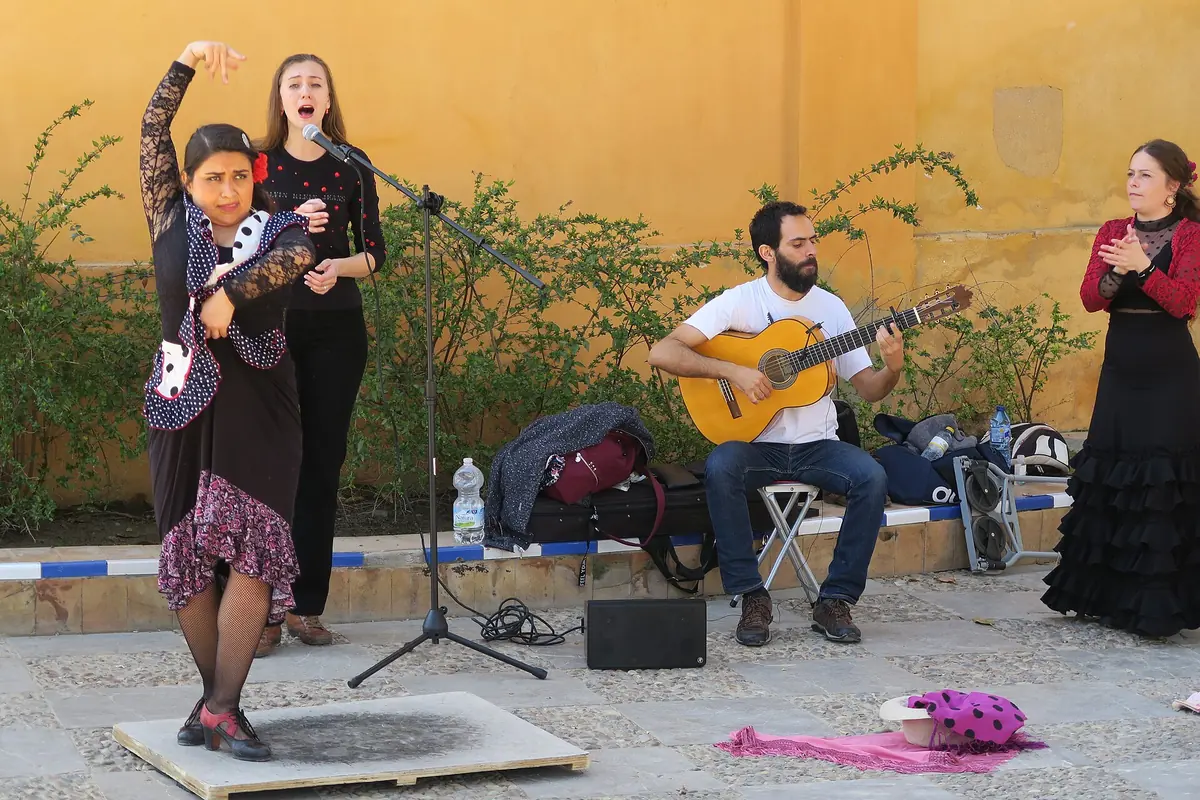
In 2010 UNESCO added flamenco to its register of intangible cultural heritage. The entry gives flamenco's home as Andalusia in the south of Spain, with older ties to Murcia and Extremadura, and calls it a badge of identity for many communities. Gitano, or Roma, families shaped it in an essential way. Another description calls it built on the folkloric music traditions of southern Spain. In a theatre you will see three crafts at once: song, dance and guitar.
Cante, the song
Cante is the vocal side of flamenco. Both men and women sing it, according to UNESCO, ideally seated and without a chorus, and the words aim at sincerity and feeling: grief, joy, tragedy, rejoicing and fear are all in range. The singer is a cantaor, a spelling that Wikipedia links to the loss of an Andalusian dialect feature. The Spanish Royal Academy defines flamenco singing as agitated Andalusian singing, and cante jondo as the most genuine song, Andalusian and of deep feeling.
Baile, the dance
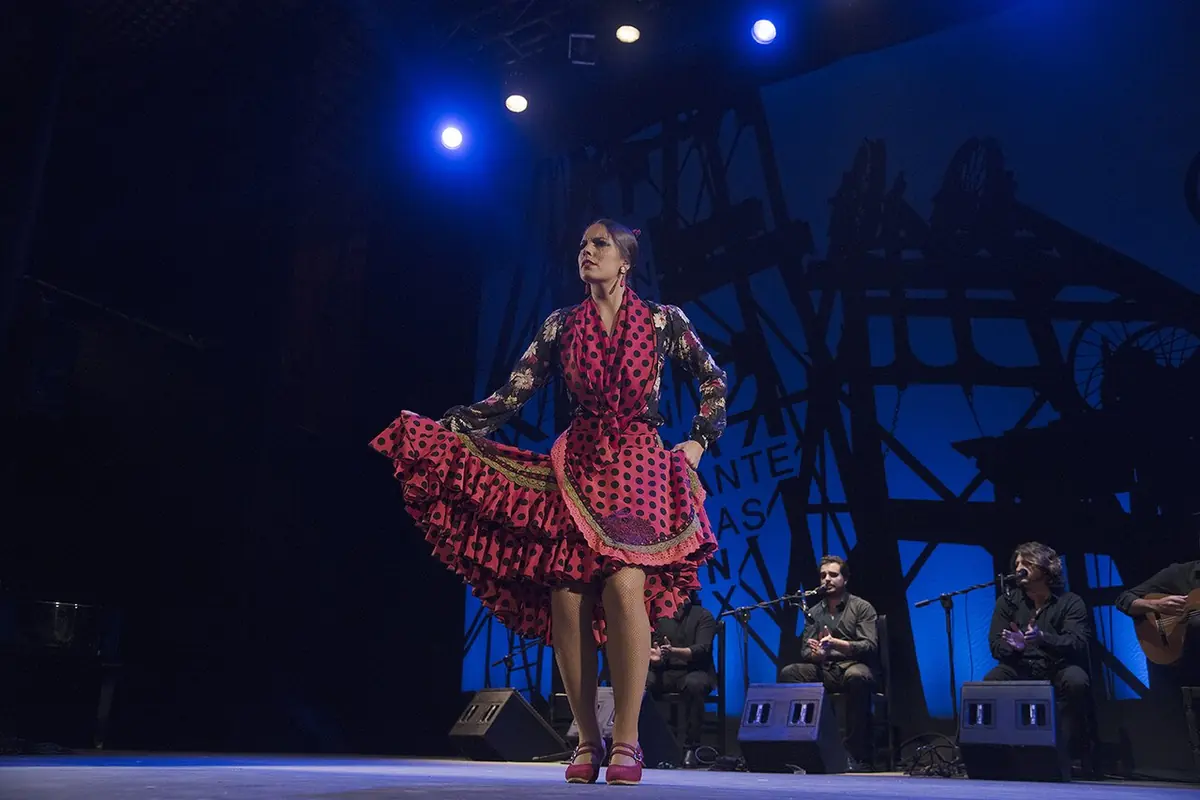
UNESCO sees the dance as passion and courtship in motion, covering moods from sadness to joy. Wikipedia adds that it is known for emotional intensity, a proud bearing, expressive arms and rhythmic footwork. Modern flamenco dance asks for years of study, with an emphasis on precise, fast footwork, and its props include castanets, canes, shawls and fans. That is why sightlines matter in a room: the arms and the face can be seen from a distance, but the feet are the part you lose from the back.
Toque, the guitar
UNESCO observes that the toque, the guitar, grew beyond simple accompaniment long ago. Wikipedia notes that the genre has its own instrument, a flamenco guitar that is lighter than the classical model and has a slimmer body and a lower voice. Between sung verses the guitarist plays a falseta, a melodic or flourishing phrase inserted between the chord sequences. Some songs are sung a palo seco, meaning without any guitar at all. In a small room you will hear the strum and the tap of the fingers on the wood, as well as the notes.
Palmas, jaleo and duende
Palmas are hand claps, and they carry the rhythm. Wikipedia notes that if there is no guitarist, the compás, the rhythm, is delivered by palmas alone. Jaleo is the calling and encouragement from the artists, often with the cries arza and olé. Duende is harder to nail down: the Spanish Royal Academy defines it as a mysterious and ineffable charm, and the poet Lorca wrote that to search for it there is no map or exercise. When it arrives, a performer is described as having duende, and Gitanos reportedly use the word for charisma.
Forms, called palos
The repertoire is divided into palos, forms that differ in rhythm and mood. The soleá and the seguiriya are both twelve-beat forms, and the soleá sits among the group called cantiñas. Flamenco tangos use the Phrygian mode and a metre in the 2/4 family. The fandango family, including malagueñas and tarantas, is described as bimodal. The farruca began as a male dance and is now often danced by women as well. The guajira comes from Cuba, and is counted in twelve. Compás is most often translated as rhythm, and it is what ties every palo together.
Improvised rather than scripted
Wikipedia describes flamenco puro as based on signals and calls of structural improvisation rather than choreographed routines, and traditional flamenco as a language composed of stanzas, set in motion by oral formulaic calls and signals. A staged show may add lighting, costume and planned sequences on top of this. At any show the practical point is the same: the artists decide how long a piece runs and what comes next, and it can change from night to night.
A short history in four dates
The oldest record of flamenco music dates to 1774, in José Cadalso's Las cartas marruecas. A newspaper article of 1847 gives the first use of the word flamenco for the music. Seville saw its first flamenco singer café in 1881, opened by Silverio Franconetti. UNESCO listed the art in 2010. Wikipedia's summary of the genre places it in the late 18th century, which fits the oldest record.
Who this isn't for
If you want a fixed, fully choreographed spectacle with a printed running order, flamenco's improvised core may feel loose. If you cannot sit through live amplified music in a room, a seated flamenco set will be a long half hour. And if you expect flamenco to be Canarian, remember that UNESCO names Andalusia as its heartland: on Tenerife it is an imported art, even where it is performed with great skill.
Sources